
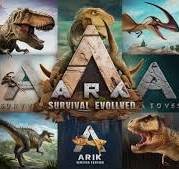
ARK: Survival Evolved (2017) – Game Icons and Banners Overview
ARK: Survival Evolved is a popular survival sandbox game developed by Studio Wildcard, initially released in 2017. Set in an open-world filled with prehistoric creatures, mythological beasts, and advanced technology, the game requires players to gather resources, craft tools, build bases, tame dinosaurs, and battle both the environment and other players. The vibrant and immersive world of ARK is not only characterized by its dynamic gameplay but also by its distinctive game icons and banners. These visual elements help shape the game’s identity, providing a memorable and engaging experience for players.
Here’s a detailed breakdown of ARK: Survival Evolved’s icons, banners, and their significance within the game:
1. Game Icons
Icons in ARK: Survival Evolved serve as crucial visual indicators. They can be found in the game’s user interface (UI), menus, inventory, crafting systems, and on various in-game items and structures. These icons communicate key information at a glance, aiding in gameplay and navigation.
a. Main Menu Icon
The main menu icon is the first image players see when starting the game. Typically featuring a dinosaur (often a T-Rex or other prehistoric creature), the ARK logo—a glowing triangular structure that symbolizes the advanced technology of the game’s lore—rests prominently in the center. This icon blends the survival theme of the game with the sense of mystery surrounding the ancient yet futuristic world.
b. Inventory and Crafting Icons
The inventory icons help categorize various resources, items, weapons, and tools:
- Resource Icons: Icons representing items like stone, wood, metal, and fibers are designed to be easily recognizable. Stone, for instance, is a simple gray rock, while wood is depicted as stacked logs. The simplicity of these icons ensures that players can quickly identify materials even in the midst of fast-paced gameplay.
- Weapon & Tool Icons: Weapons like spears, bows, and rifles each have distinctive icons. The attention to detail—such as the flint tip on spears or the sleek metal of a fabricated rifle—adds to the realism of the crafting system.
- Dinosaur Icons: Each tamed or wild dinosaur has its own icon. These icons often depict the creature in a simplified, but identifiable form, helping players manage their tamed dinosaurs or identify threats.
c. Status Effects Icons
Various buffs and debuffs in the game are represented by status effect icons. These icons quickly communicate important information about the player’s condition, such as:
- Poisoned: Depicted by a green skull icon, indicating the player has been poisoned.
- Overheating: A sun icon with heat waves symbolizes overheating.
- Starvation/Thirst: Hunger is shown by a meat icon, while thirst is represented by a water droplet.
These small, easily recognizable icons ensure that players can manage their characters’ health and resources efficiently, even during intense moments of combat or exploration.
d. Tribe and Player Icons
In multiplayer modes, players form tribes, and each tribe can have its own icon that appears on flags, banners, or armor. These icons represent tribe identity and are customizable, allowing players to create their own designs. Tribe icons can vary from simple shapes and logos to more intricate, personalized graphics.
sven coop game icons banners– A Guide for Fans and Creators
2. Game Banners
Banners in ARK: Survival Evolved are used both within the game world as well as in external promotional materials. They serve not only as decoration but also as ways to signify territory, status, and communication.
a. Promotional Banners
When ARK: Survival Evolved launched and throughout its updates, promotional banners played a key role in communicating new content and expansions. These banners often feature:
- Expansions and DLC: With each major DLC (like Scorched Earth, Aberration, Extinction, and Genesis), promotional banners highlight the major creatures, environments, and gameplay mechanics. For instance, the Scorched Earth banner features the barren desert landscape, with iconic creatures like the Wyvern soaring in the background.
- Event Banners: ARK frequently hosts seasonal events like the ARK: Fear Evolved (Halloween) and Winter Wonderland (Christmas), each with its own themed banner. These banners incorporate spooky, festive, or playful designs, emphasizing the unique aesthetic and items tied to each event.
b. In-Game Banners and Flags
Within the game world, banners and flags serve as visual markers of territory, tribe allegiance, and personalization.
- Tribe Banners: Tribes in ARK can design their own flags and banners, which can be placed around their bases or on tamed creatures. These banners are often used to mark territory and send a visual message to both allies and enemies. Customization options allow for intricate designs, from minimalist symbols to complex tribal patterns.
- Event Banners: In-game events (like raids, battles, or boss fights) often feature decorative banners in the arenas or surrounding environments. These banners are inspired by the lore of ARK, often featuring ancient or technological motifs to tie into the ongoing narrative.
c. Boss Battle Banners
When players engage in boss battles in ARK (such as fighting the Broodmother, Dragon, or Overseer), the battle arenas are often adorned with banners and symbols specific to that boss. These banners help create an atmosphere of importance and challenge, marking the encounter as a climactic event within the game.
d. Achievement Banners
Players can also earn various achievement banners by completing difficult tasks, challenges, or quests. These banners might show up in base decorations, such as wall-mounted trophies or flags, giving players a sense of accomplishment and progression within the game.
3. Icon and Banner Design Themes
The overall design of ARK’s icons and banners can be grouped into a few key themes:
a. Prehistoric & Primal Themes
The survival aspect of ARK is deeply rooted in a prehistoric setting. Therefore, many icons and banners use earthy tones, animalistic imagery, and rugged textures. Items like primitive spears, stone axes, and bows have rough, unrefined appearances, reflecting the struggle for survival in the wild.
b. Futuristic & Sci-Fi Themes
Contrasting with the prehistoric world, ARK introduces advanced technology such as TEK gear. The icons and banners for TEK equipment use sleek, glowing designs in blues and purples, symbolizing the game’s sci-fi aspect. For example, TEK rifles and armor feature holographic details, representing the futuristic technology that players unlock as they progress.
c. Mythical Themes
In expansions like Aberration and Genesis, the game introduces mythological creatures and otherworldly environments. The banners and icons here are often more mystical, with swirling patterns, bioluminescence, and strange geometric shapes that evoke a sense of the supernatural.
Conclusion
The icons and banners in ARK: Survival Evolved are more than just cosmetic additions—they are essential elements that contribute to the game’s identity, atmosphere, and gameplay. Whether helping players navigate menus or contributing to the immersive world-building within ARK’s dynamic environment, these visual tools play a critical role in shaping the overall experience. The detailed and thematically appropriate design of icons and banners enhances both the survival challenge and the epic adventure players embark upon in this prehistoric yet futuristic world.
Also read: A Deep Dive into minecraft (2009) game icons banners


** - This is an open-source clone of the popular puzzle game 2048. The game is simple: combine tiles with the same number to reach 2048. Written in JavaScript and hosted on GitHub Pages, it became incredibly popular, with many variations created by other developers. 2. **[Hextris](https://hextris.io/)** - A fast-paced puzzle game inspired by Tetris. It’s a minimalistic but addictive experience. The source code is available on GitHub, and the game runs smoothly on both desktop and mobile devices. 3. **[Flappy Bird in HTML5](https://nebez.github.io/floppybird/)** - A clone of the infamous mobile game Flappy Bird built using HTML5 and JavaScript. This version keeps the original gameplay while showcasing how simple browser-based games can be built and hosted on GitHub Pages. 4. **[Racing Game](https://codevinsky.github.io/racing-game/)** - A small browser-based racing game written in JavaScript. It is a simple, yet fun project that showcases the basics of physics-based game mechanics. 5. **[Dungeon Crawler](https://schteppe.github.io/cannon.js/demos/collisions.html)** - A simple 3D dungeon crawler built using the Cannon.js physics engine and Three.js. It demonstrates the potential of WebGL for rendering real-time 3D graphics in browser-based games. ### How to Host Your Own GitHub.io Game If you're interested in developing or showcasing your own browser-based games using GitHub Pages, follow these steps: #### 1. **Create a GitHub Account and Repository** - Sign up for a GitHub account (if you don’t have one already) and create a new repository for your game. Make sure the repository is public if you want others to play and view the game. #### 2. **Upload Your Game Files** - Upload all necessary files for your game: `index.html`, `styles.css`, `game.js`, images, sounds, and any other assets. #### 3. **Enable GitHub Pages** - Go to the repository settings and scroll down to the "GitHub Pages" section. - Under the "Source" dropdown, select the `main` branch (or whichever branch you are using) and save. - GitHub will then generate a link for your game at `.github.io/`. #### 4. **Play and Share** - Once GitHub Pages processes your files, your game will be live! Share the link with friends or the gaming community. ### Tools and Frameworks for Building GitHub.io Games Here are some popular tools and frameworks for building browser-based games: 1. **Phaser**: A fast, powerful, and free framework for developing 2D games in HTML5. It provides features like physics, animation, input handling, and audio. 2. **Three.js**: A popular JavaScript library that simplifies working with WebGL for creating 3D games and experiences. 3. **P5.js**: A creative coding library that makes it easy to create interactive visuals, animations, and games. It is often used for educational games. 4. **Babylon.js**: A powerful 3D engine that allows developers to create complex 3D browser games. 5. **Construct**: A game development platform that allows for visual game creation with no coding necessary. However, the final output can still be hosted on GitHub Pages. ### Benefits of Hosting Games on GitHub.io 1. **Free and Easy Setup**: You can host static web content for free on GitHub Pages, making it perfect for indie game developers on a budget. 2. **Open Source Collaboration**: GitHub’s collaborative features like issues, pull requests, and forks make it easy for other developers to contribute to your game. 3. **Publicity**: Hosting your game on GitHub.io can bring exposure, especially if your repository becomes popular in the open-source community. 4. **Portfolio Building**: Many developers use GitHub.io to showcase their personal projects and portfolios, and game development can be a standout skill in any portfolio. 5. **Automatic Version Control**: With Git’s built-in version control, you can easily track changes to your game and roll back to previous versions if necessary. ### Challenges of GitHub.io Games 1. **Static Hosting Only**: GitHub Pages only supports static files (HTML, CSS, and JavaScript), so games requiring server-side logic (e.g., multiplayer games) need to use external services for server functionality. 2. **File Size Limits**: GitHub Pages has certain limits on repository size, so games with heavy assets (e.g., high-res images, large audio files) may not be ideal candidates. 3. **Performance**: While GitHub Pages works well for small and medium-sized games, larger games may suffer from performance issues, especially if not optimized. ### Final Thoughts **GitHub.io games** represent a great opportunity for developers of all skill levels to create, share, and collaborate on browser-based games. The combination of GitHub’s version control and community-driven ecosystem with the simplicity of static site hosting makes it an excellent choice for indie developers and hobbyists alike. Whether you’re looking to create a simple puzzle game, an educational app, or a complex interactive experience, GitHub Pages is a powerful and free platform to bring your game to the world.](https://cageoflife.com/wp-content/uploads/2024/09/github.io-games-218x150.png "A Detailed Guide to GitHub.io Games")

